Direct when possible
When two people can reach each other, dmsg prefers a peer-to-peer path instead of forcing every message through one central chat server.
dmsg is a privacy-first messenger designed so people can communicate device to device whenever possible — with encrypted, resilient fallback delivery when a contact is offline.
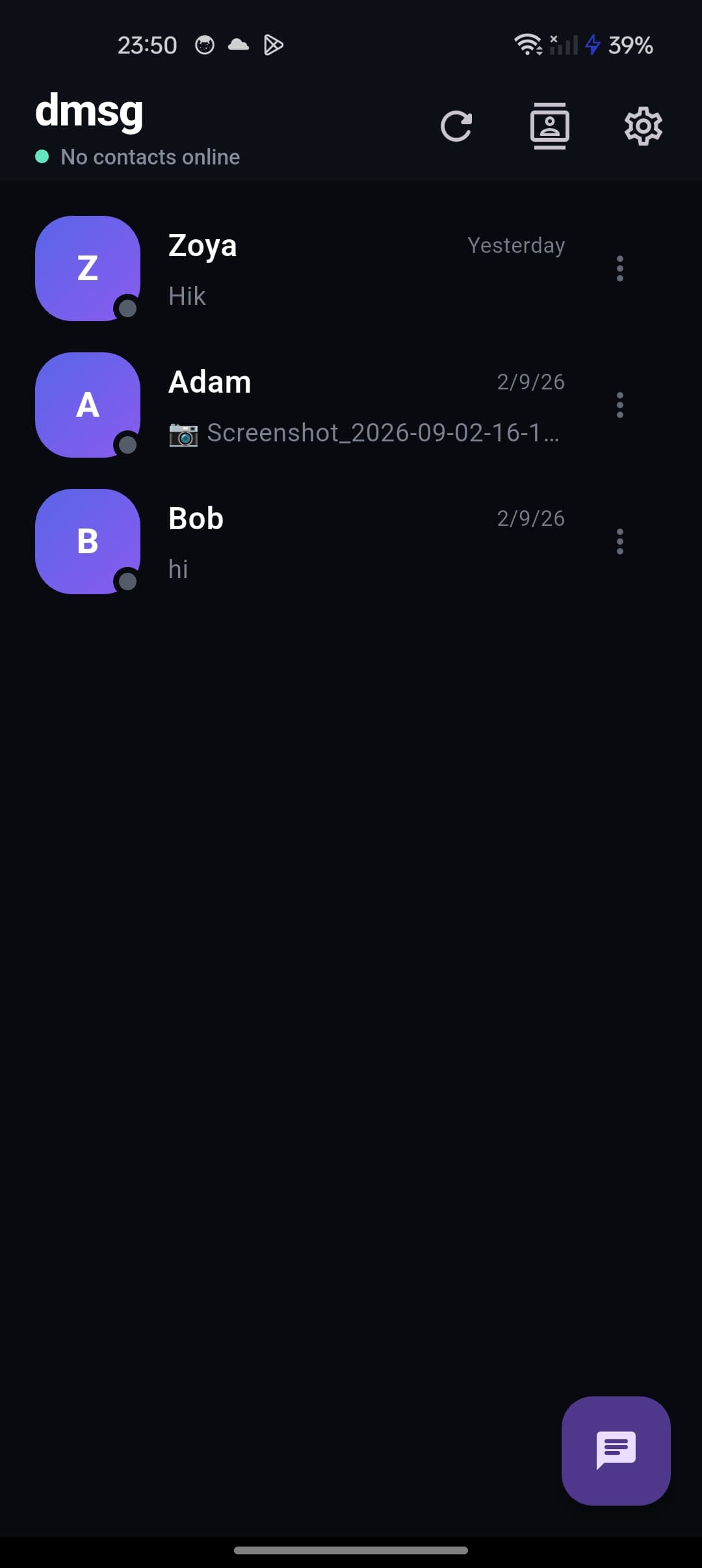
Most familiar messengers are built around large central systems that receive, route and temporarily store communication.
dmsg changes the route. Devices try to find each other, establish an authenticated encrypted session and communicate directly. Infrastructure remains useful for discovery, waking devices and offline delivery — but it is not designed to own the conversation.
Instead of asking you to trust a privacy promise alone, dmsg is being designed to reduce how much central infrastructure needs to be involved at all.
When two people can reach each other, dmsg prefers a peer-to-peer path instead of forcing every message through one central chat server.
Message content is encrypted before it leaves your device and decrypted by the intended recipient.
Your identity is cryptographic and portable, rather than existing only as a row inside a central account database.
If a contact is offline, encrypted payloads can be temporarily staged and fetched when that person comes back.
DHT-assisted discovery helps peers find one another across real networks without a classic central routing directory.
Infrastructure helps with discovery, wake-ups and offline delivery, but is not designed to be the permanent home of your conversations.
The protocol can be complex underneath, but the app should feel like a messenger people already understand.
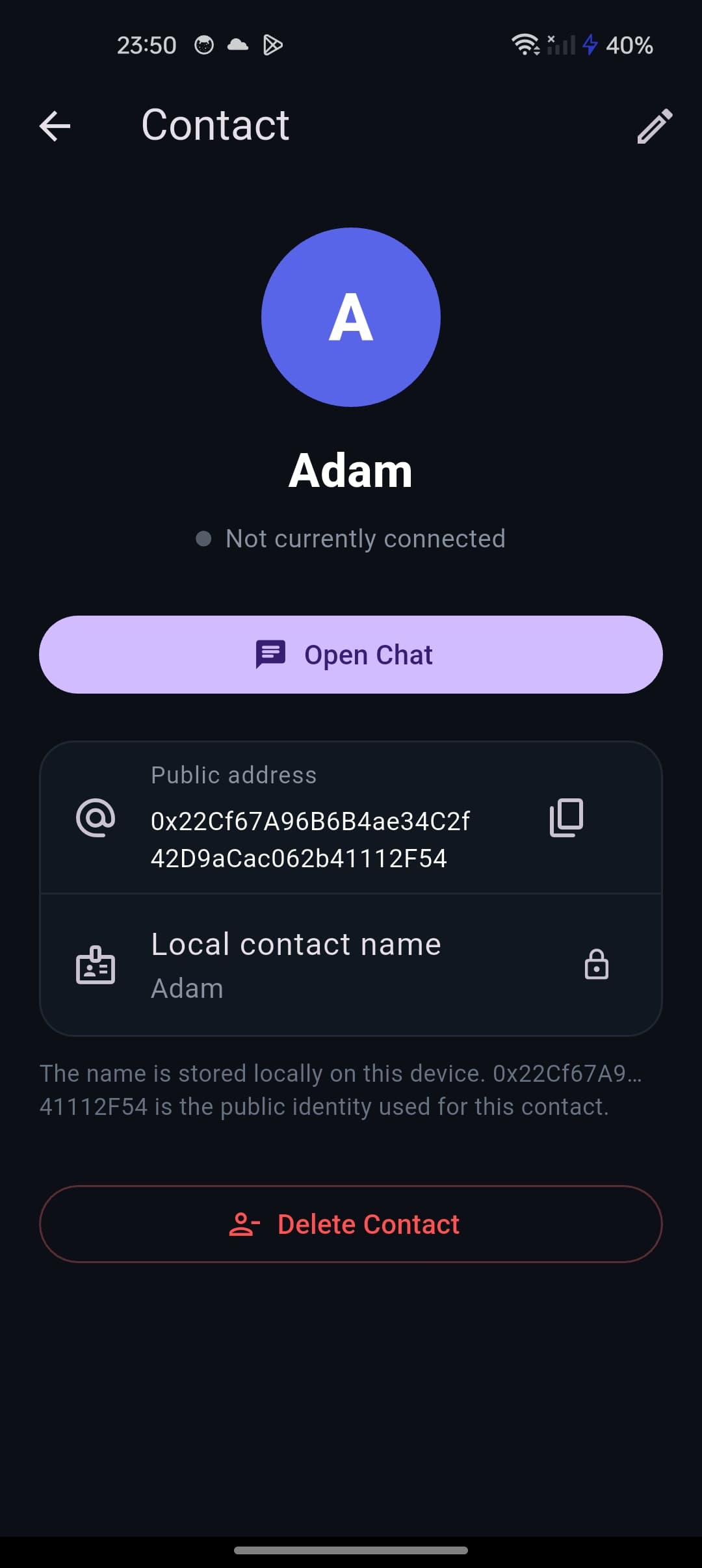
Contacts can be tied to a public cryptographic address instead of relying only on a centralized account identity.
QR and public-address sharing make it clear what identity you are actually exchanging.
Encrypted recovery and user-controlled credentials are designed around restoring access without exposing message content.
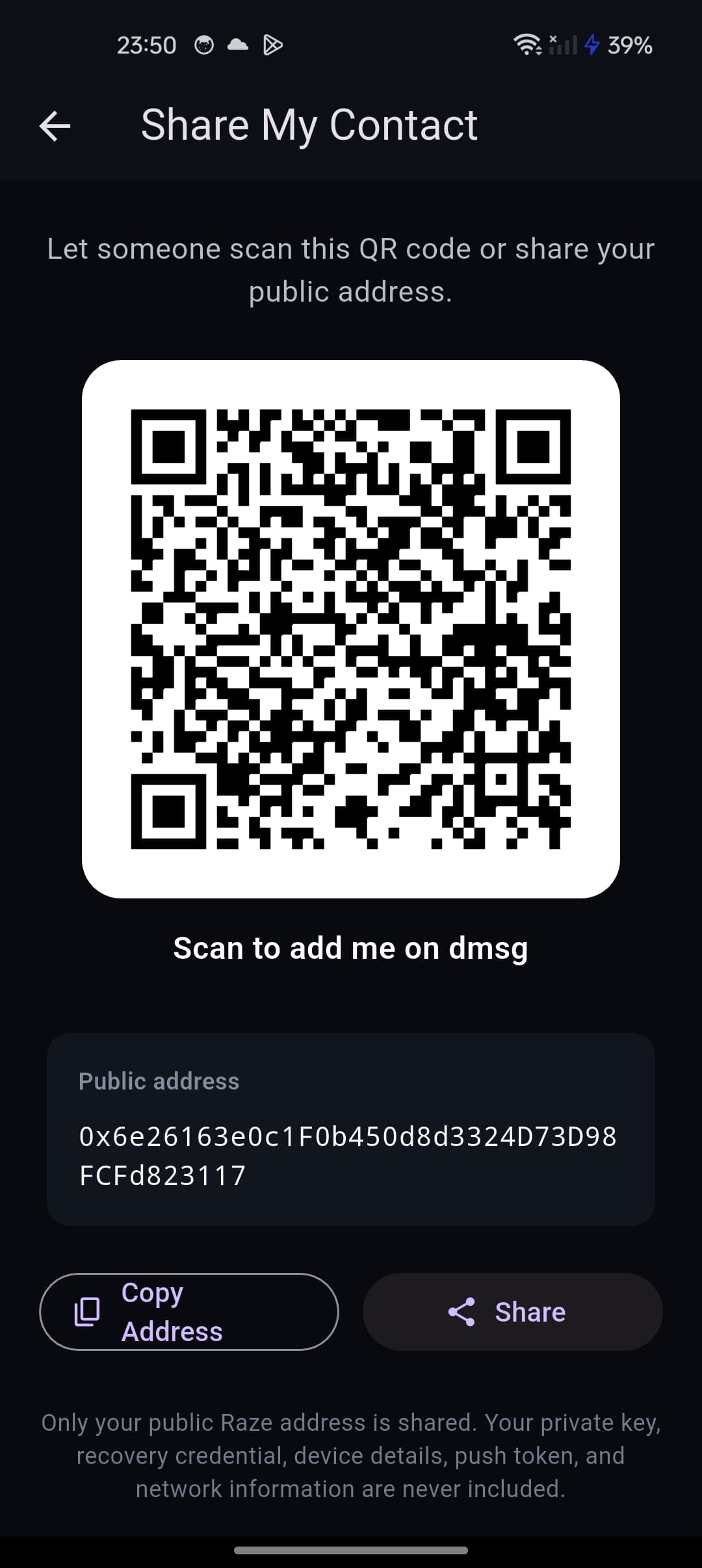
Share your contact by QR or public address.
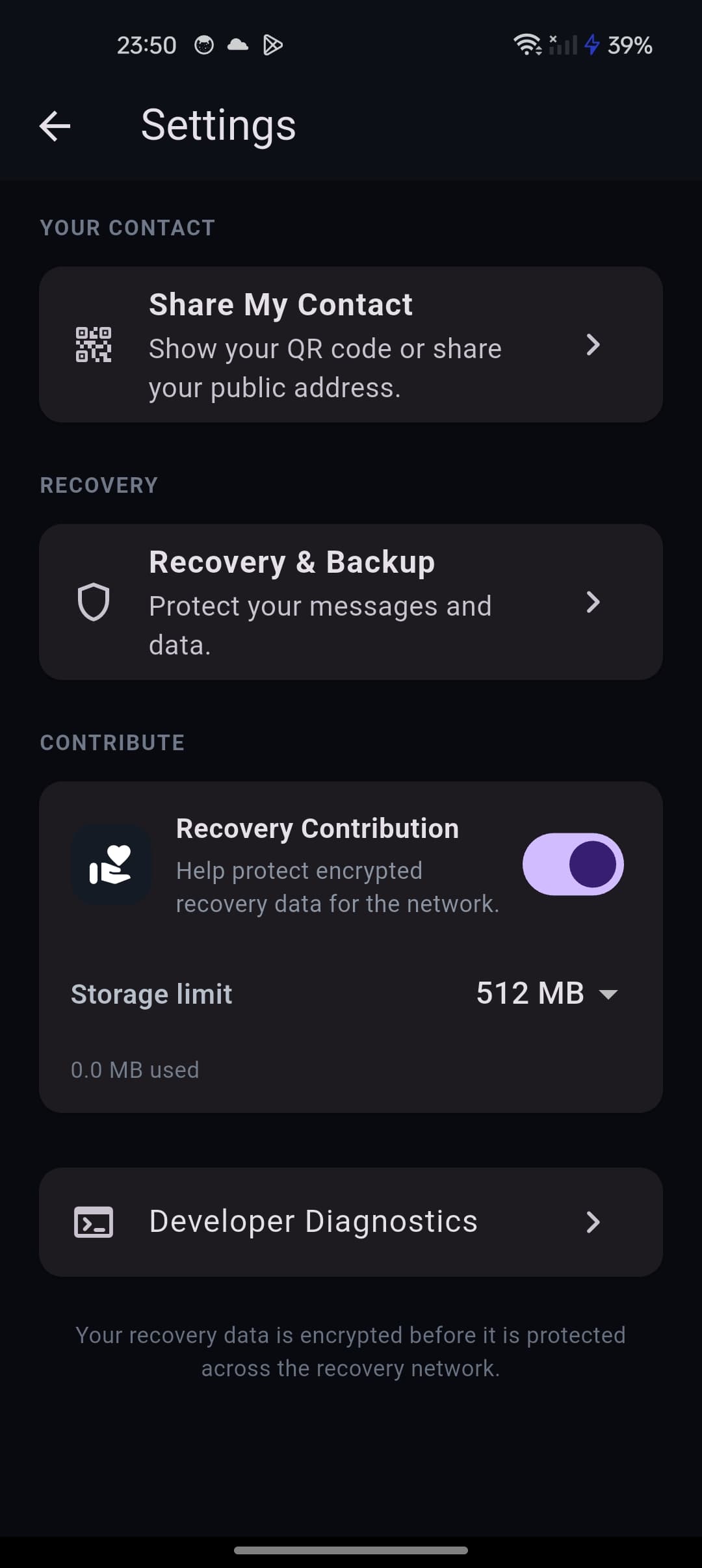
Recovery contribution and privacy controls live inside the product.
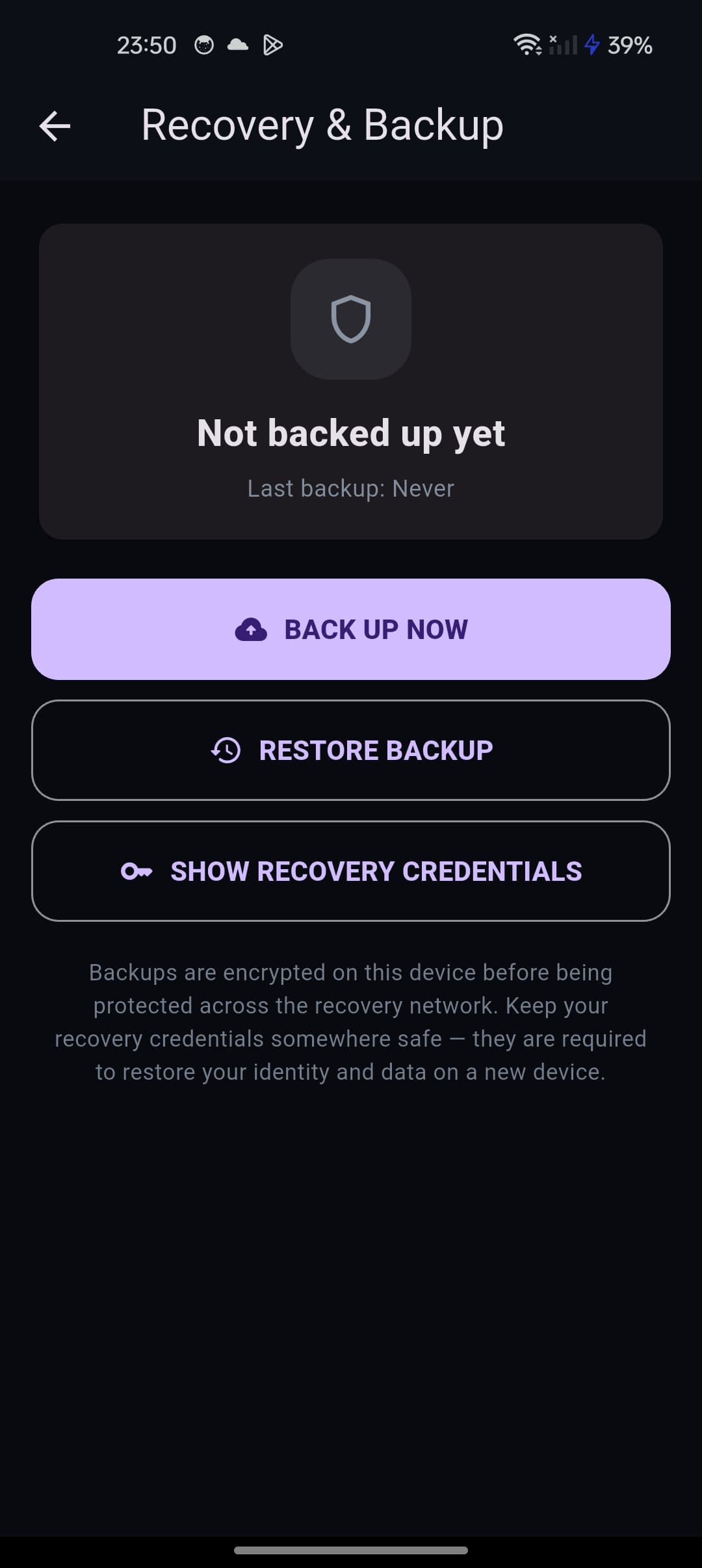
Encrypted backup and recovery are explicit, not hidden magic.
No jargon required. Here is the journey in plain English.
The message is prepared and encrypted on your device.
If your contact is reachable, the system prefers a direct peer path.
The recipient verifies the session and decrypts the message locally.
Direct delivery is preferred, but real phones go offline. dmsg can temporarily stage encrypted messages or attachments across its delivery infrastructure. When the recipient returns, content is fetched and acknowledged.
For technical users, dmsg combines cryptographic identity, distributed discovery, authenticated sessions, peer transport and resilient offline delivery into one mobile-first messaging flow.
A device owns a cryptographic identity used to recognize trusted contacts.
Distributed discovery and known-peer information are used to locate a path.
Devices establish and authenticate a secure session.
When reachable, messages and attachments move over the peer path.
When a peer is unavailable, encrypted temporary storage bridges the gap.
Local state and encrypted recovery mechanisms are designed to keep conversations resilient.
A serious mobile P2P messenger still needs help with discovery, NAT-heavy networks, background wake-ups and offline users. The difference is what that infrastructure is trusted to do.
P2P messaging is easy in a lab and difficult on real phones. dmsg is being engineered around the messy parts: changing networks, intermittent reachability, mobile background restrictions, delivery recovery and large encrypted attachments.
We are building a peer-to-peer messenger from India for a more private, resilient and user-controlled way to communicate.